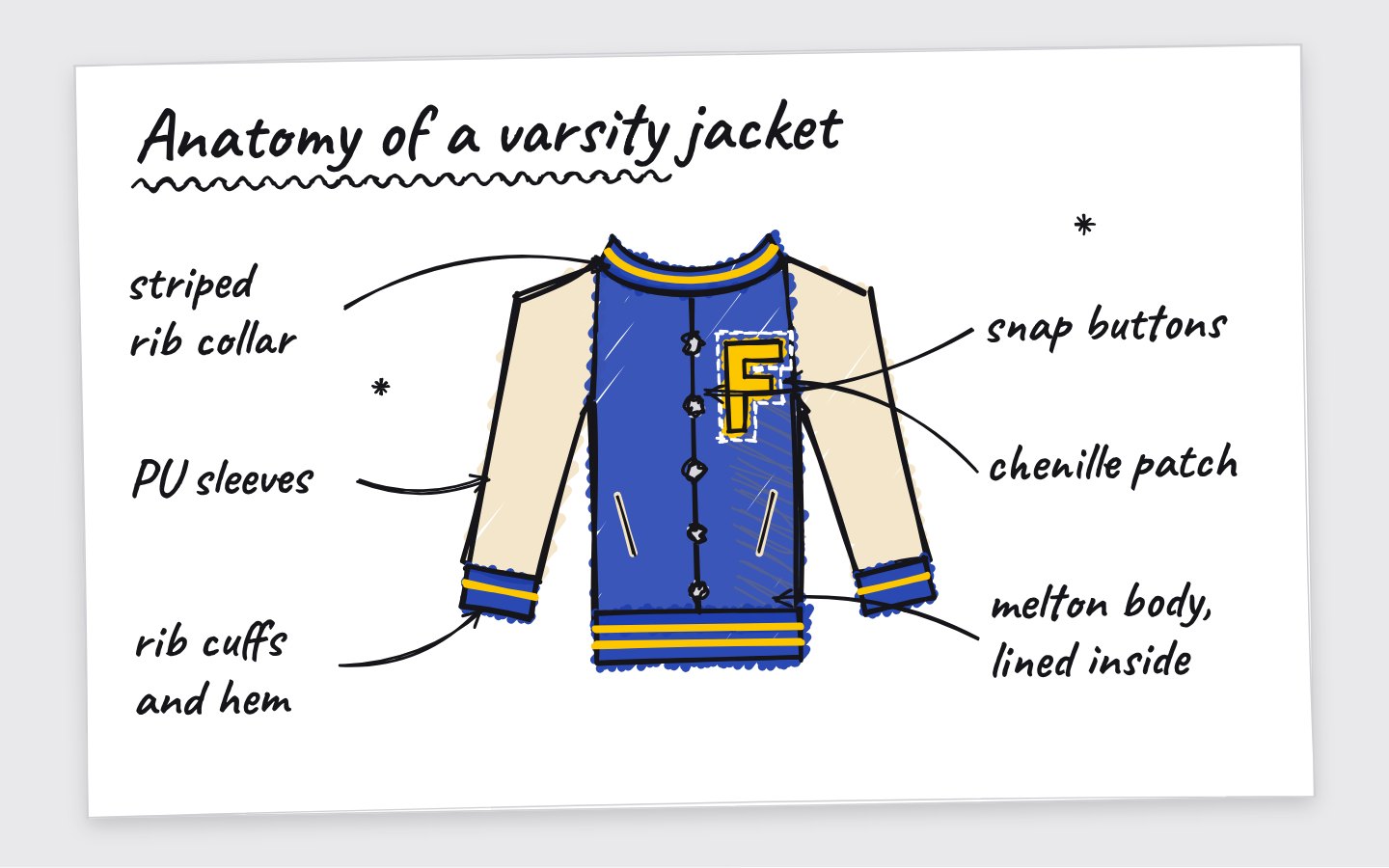
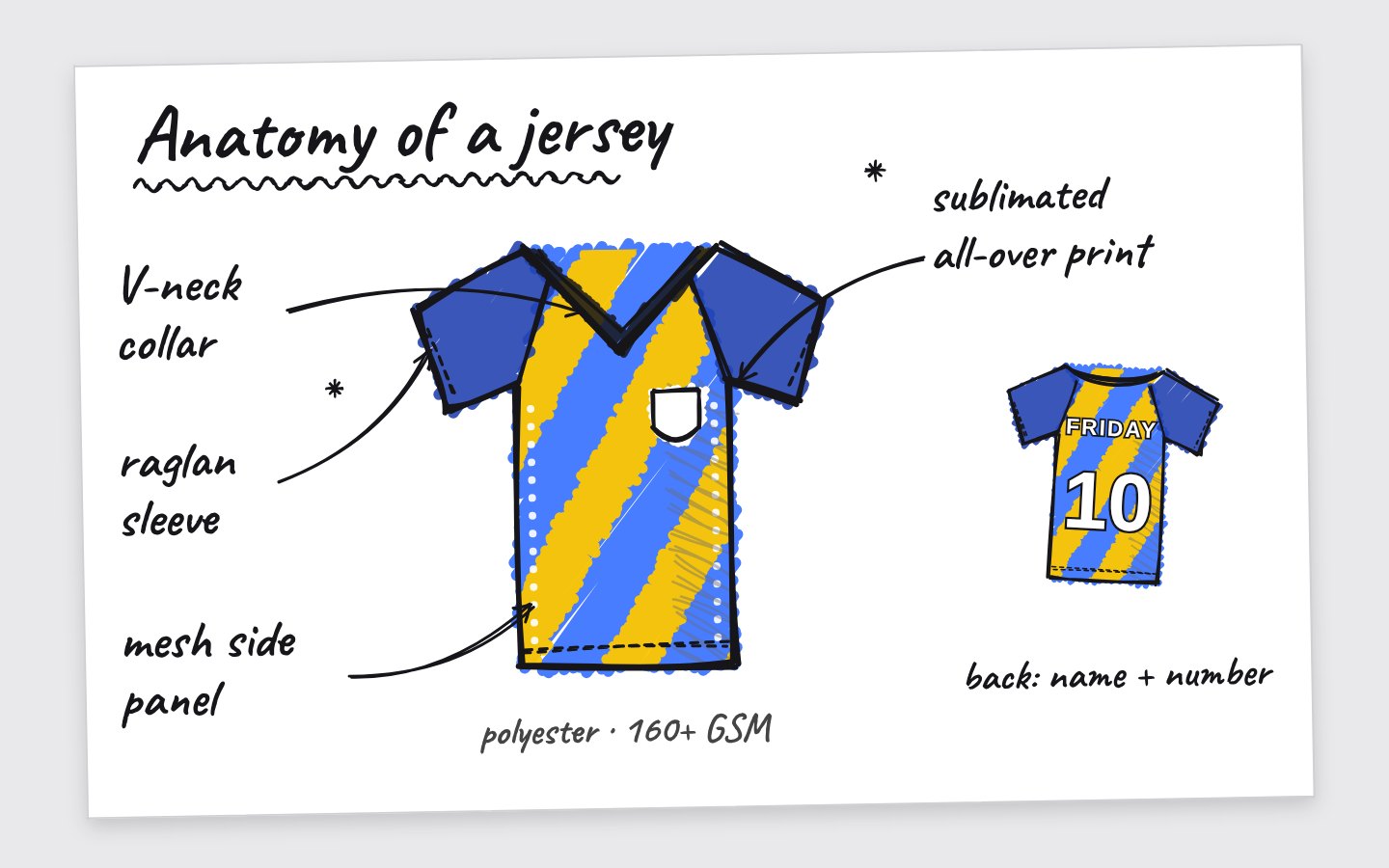
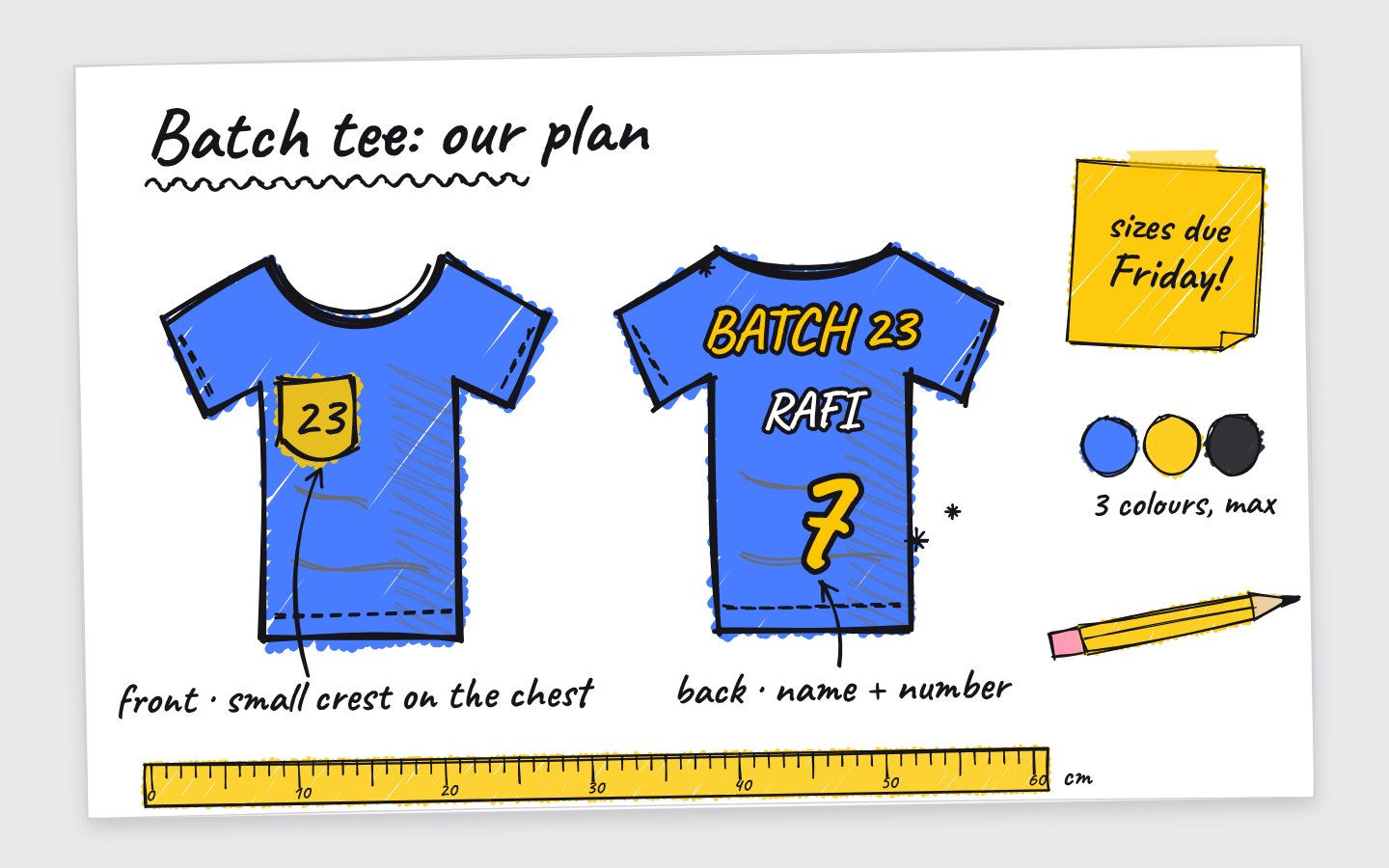
Custom Hoodies in Bangladesh: Fabric, Price and Quality, Explained
Real price ranges, what 350 GSM means, why a hoodie costs more than a T-shirt, how quality is checked, and five checks you can do yourself.
Friday Team · 17 November 2026 · 9 min read
On this page
- 1The parts of a hoodie, and why each one matters
- 2Fabric: fleece or French terry
- 3GSM: what 350+ really tells you
- 4Why a hoodie costs more than a T-shirt
- 5How the price is built
- 6What a custom hoodie costs in Bangladesh
- 7How quality is measured
- 8Five checks you can do yourself
- 9From fabric to your hands: the route of a hoodie
- 10Before you order: a checklist
- 11Questions people ask
The parts of a hoodie, and why each one matters
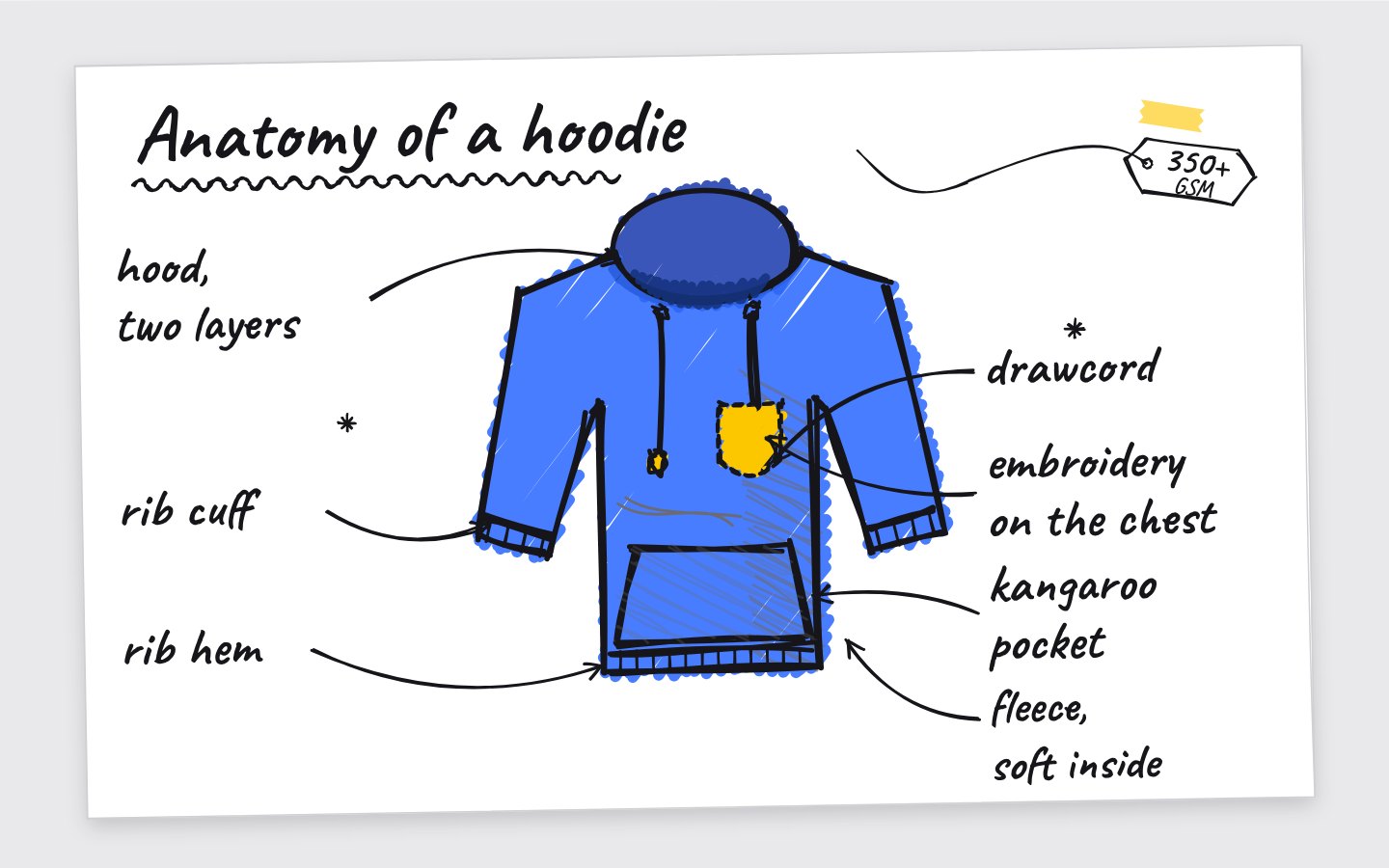
A hoodie looks simple, but it has more parts than a T-shirt, and every part is a place where quality is won or lost. Use the sketch above as a checklist.
- Body and sleeves: the main fabric. Its weight and knit decide how warm it is, how it hangs and how long it keeps its shape.
- Hood: usually two layers, so it stands up instead of flopping. A single-layer hood is cheaper and looks limp.
- Drawcord and eyelets: the cord can be flat or round, and the holes have metal rings or stitched edges. Loose eyelets are one of the first things to fail.
- Kangaroo pocket: the front pouch. Its corners take the most strain, so look for reinforced stitching there.
- Rib at the cuffs and hem: a stretchy knit that grips. Good rib springs back. Weak rib goes wavy after a few washes.
- Seams: the tape at the shoulders and neck, and the stitch type, hold the whole garment together.
- Decoration: embroidery or print, on the chest, back or sleeve.
Fabric: fleece or French terry
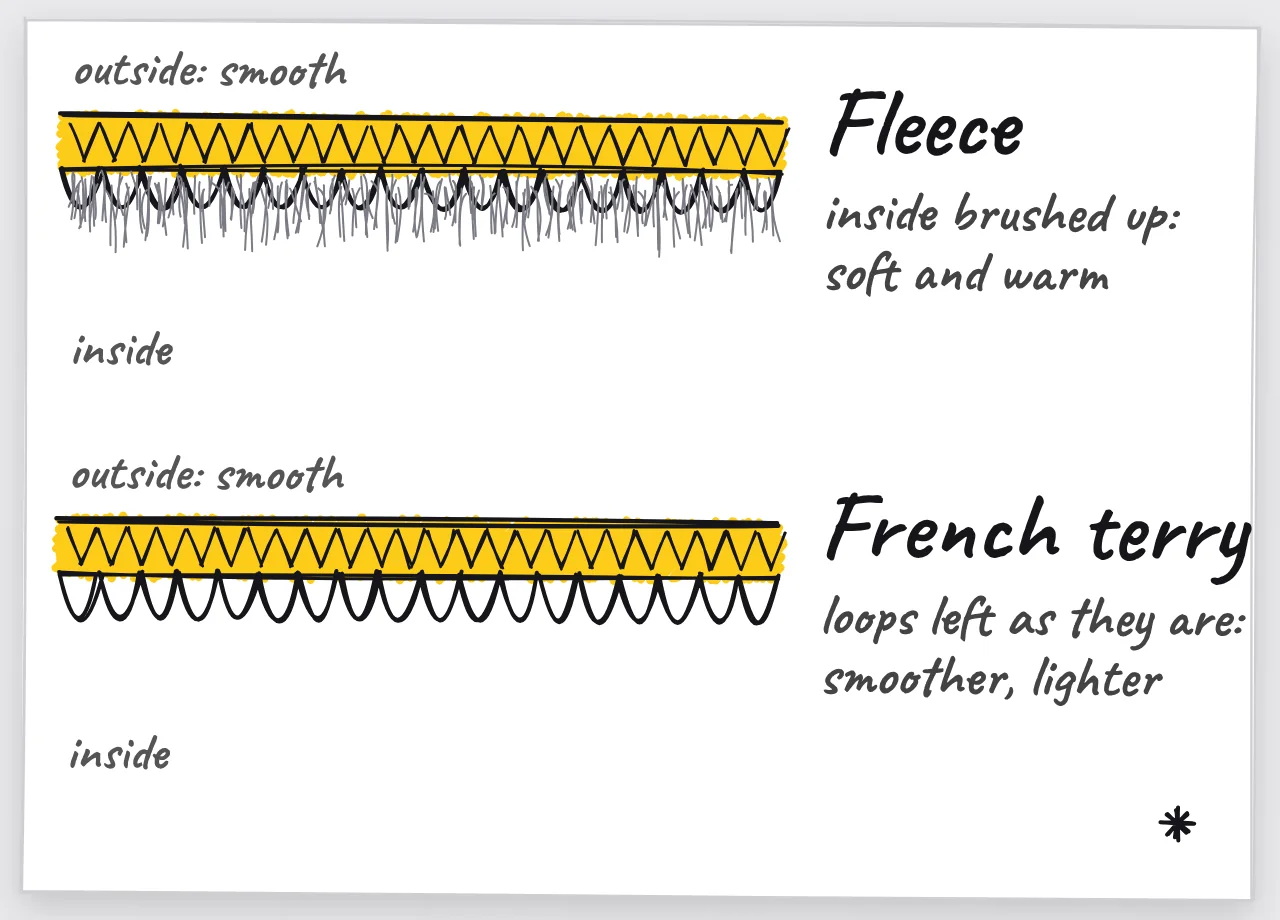
Most hoodies are made from one of two knits. Both are smooth outside and made of loops inside. The difference is what is done with the loops.
Fleece has its inner loops brushed up into a soft fuzz. That traps air, so it feels warm and cosy, and it is usually the heavier of the two.
French terry keeps the loops as they are. It feels smoother, lighter and cooler, and it suits mild weather and indoor wear.
Then there is the fibre. Cotton-rich fabric feels soft and breathes well, but it can shrink more. A cotton and polyester blend is often cheaper and shrinks less, but it can breathe less. Ask for the exact composition, such as "80% cotton, 20% polyester", not just "fleece".
GSM: what 350+ really tells you
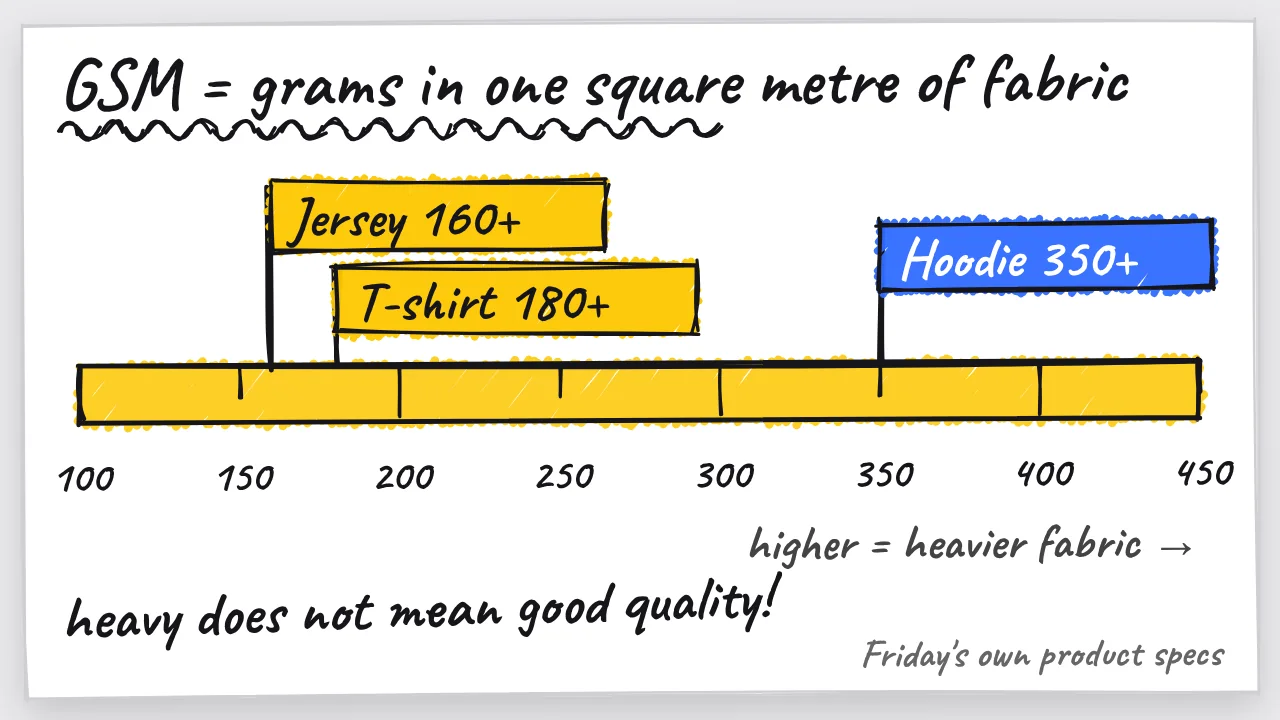
GSM stands for grams per square metre. Cut one square metre of the fabric, weigh it, and you have its GSM. A higher number means more fabric in every piece: more weight, more warmth and more cost.
On our product pages, T-shirts are 180+ GSM, jerseys are 160+ GSM and hoodies are 350+ GSM. That is why a hoodie feels so different in the hand. Every square metre holds almost twice the fabric, and the garment is bigger too.
But weight is only one number. A heavy but loosely knitted fleece can pill and lose its shape. A slightly lighter, tightly knitted one can feel better and last longer. Treat GSM as the first question, then check the fibre, the knit and the finish.
The "+" in "350+" means "at least". Real rolls vary a little, so ask what range to expect.
Why a hoodie costs more than a T-shirt
It is not one big reason. It is five small ones that add up.
- More fabric. A bigger garment, in a fabric that weighs almost twice as much per square metre, means roughly three times the fabric weight of a T-shirt, depending on size and style.
- More parts. The hood, pocket, drawcord, rib and tape each need cutting, trims and sewing time.
- More sewing. A hoodie goes through many more sewing steps than a T-shirt, and thick fabric is slower to sew.
- Costlier decoration. Embroidery is priced by its size and stitch count, and a chest crest on thick fabric needs careful setup.
- Bulkier to pack and ship. A folded hoodie takes far more room in a box and in a courier bag.
How the price is built
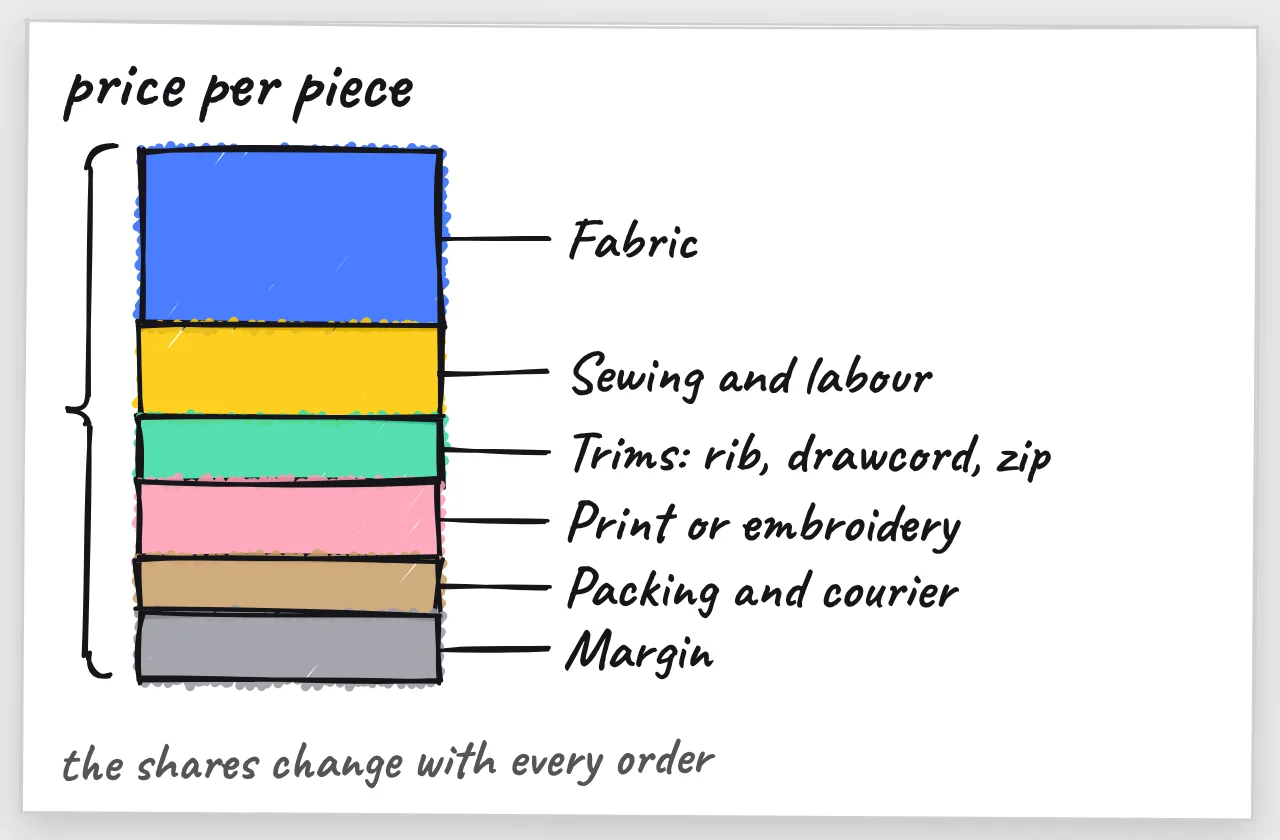
Whoever makes your hoodie adds up the same six blocks, whatever they call them.
- Fabric, including the waste that is cut away. It is usually the biggest block.
- Sewing and labour: the time to cut and sew each piece.
- Trims: rib, drawcord, eyelets, zipper, labels and tags.
- Print or embroidery.
- Packing and courier.
- Margin, which keeps the business running.
Quantity changes the picture in one way. Some costs are paid once per order, not once per piece: making the pattern, setting up the cutting, preparing an embroidery file, producing a sample. Spread over 30 pieces, those costs add a lot to each hoodie. Spread over 100 pieces, they add much less. The fabric cost per piece changes far less.
Here is a made-up example, only to show the idea. Say the one-time costs of an order come to ৳6,000. At 30 pieces that adds ৳200 to every hoodie. At 100 pieces it adds ৳60. These numbers are for illustration only. They are not Friday's prices.
This is also why makers set a minimum order. Below a certain quantity, the one-time costs make every piece too expensive.
Planning a batch order?
Tell us how many and by when. Rates, fabric options and a timeline in 1–2 hours.
150+ projects · Free sample once you confirm
What a custom hoodie costs in Bangladesh
From our own orders, custom hoodies in Bangladesh fall into four price bands. Prices are per piece, for bulk orders.
| Band | Per piece | What you usually get |
|---|---|---|
| Budget | around ৳500 | The cheapest. Usually poor quality: thin fabric, weak stitching. |
| Standard | ৳700–1,000 | A good everyday hoodie. |
| With branding | ৳1,700–3,000 | Custom embroidery, labels, tags and special trims. |
| Premium | ৳5,000+ | The best fabric, finishing and details. |
The exact price depends on quantity, fabric (GSM), print or embroidery and trims. If a quote is far below the standard band, ask what was cut: usually the fabric weight or the stitching.
How quality is measured
Factories and buyers do not judge quality by touch alone. They run tests, and the same few come up again and again.
- Fabric weight (GSM), checked against the specification.
- Shrinkage: wash a piece the way a customer would and measure how much it changes. Buyers often accept only a few percent.
- Colour fastness: does the colour hold in washing, when rubbed, and with sweat? It is graded from 1 (poor) to 5 (excellent), and 4 or above is generally considered good.
- Pilling: after a standard rub, how many little fuzz balls appear? Also graded 1 to 5.
- Seam strength: how much pull a seam takes before it opens.
- Decoration durability: do embroidery and print survive repeated washing without cracking, peeling or fading?
On finished goods, factories also inspect by sampling. A set number of pieces is pulled from the batch and checked against a limit for defects, called AQL. A common setting is AQL 2.5 for major defects and 4.0 for minor ones. Pieces are measured against the size chart, and the stitching, print and trims are checked.
You do not need a lab. Ask the maker which of these tests they run, and ask to see a sample that has been washed once.
How we check quality at Friday
Every Friday order goes through the same standard checks before it is packed.
- GSM: the fabric weight is checked against what you ordered.
- Stitch type: overlock to join the knit pieces, coverstitch on hems and cuffs, lockstitch on pockets and labels.
- Stitch density (SPI): we count the stitches in one inch of seam. Heavy fleece usually sits around 8–10, lighter T-shirt fabric around 10–12. Too few and the seam gapes; too many on thick fabric and the needle holes weaken it.
- Stitch quality: even stitch length and thread tension, no skipped or broken stitches, no puckering, no loose threads.
- Seams: stress points such as pocket corners, shoulders and cuffs are pulled to check that they hold.
- Measurements: chest, length and sleeve against the size chart. Factories usually allow about ±1–2 cm.
- Print and embroidery: placement and colours, with no cracks or loose threads.
Five checks you can do yourself
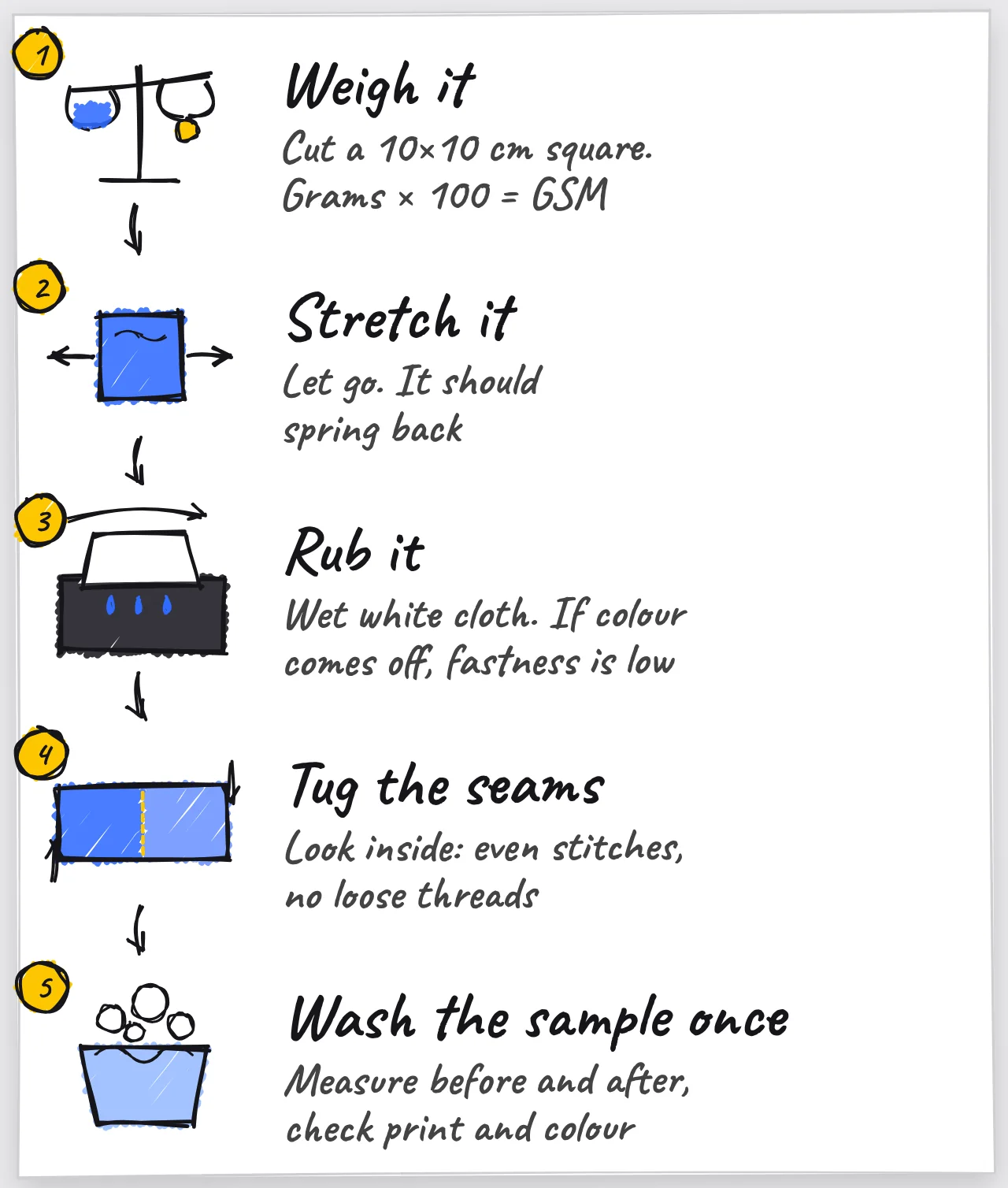
With a sample in your hands, these take a few minutes and tell you a lot.
For the weight check you need a jewellery scale that reads to 0.01 g, and a swatch cut from a spare piece or an offcut. Never cut the sample you plan to approve. Ask the maker for an offcut.
None of these replaces a lab test, but a piece that fails two of them is a red flag.
From fabric to your hands: the route of a hoodie
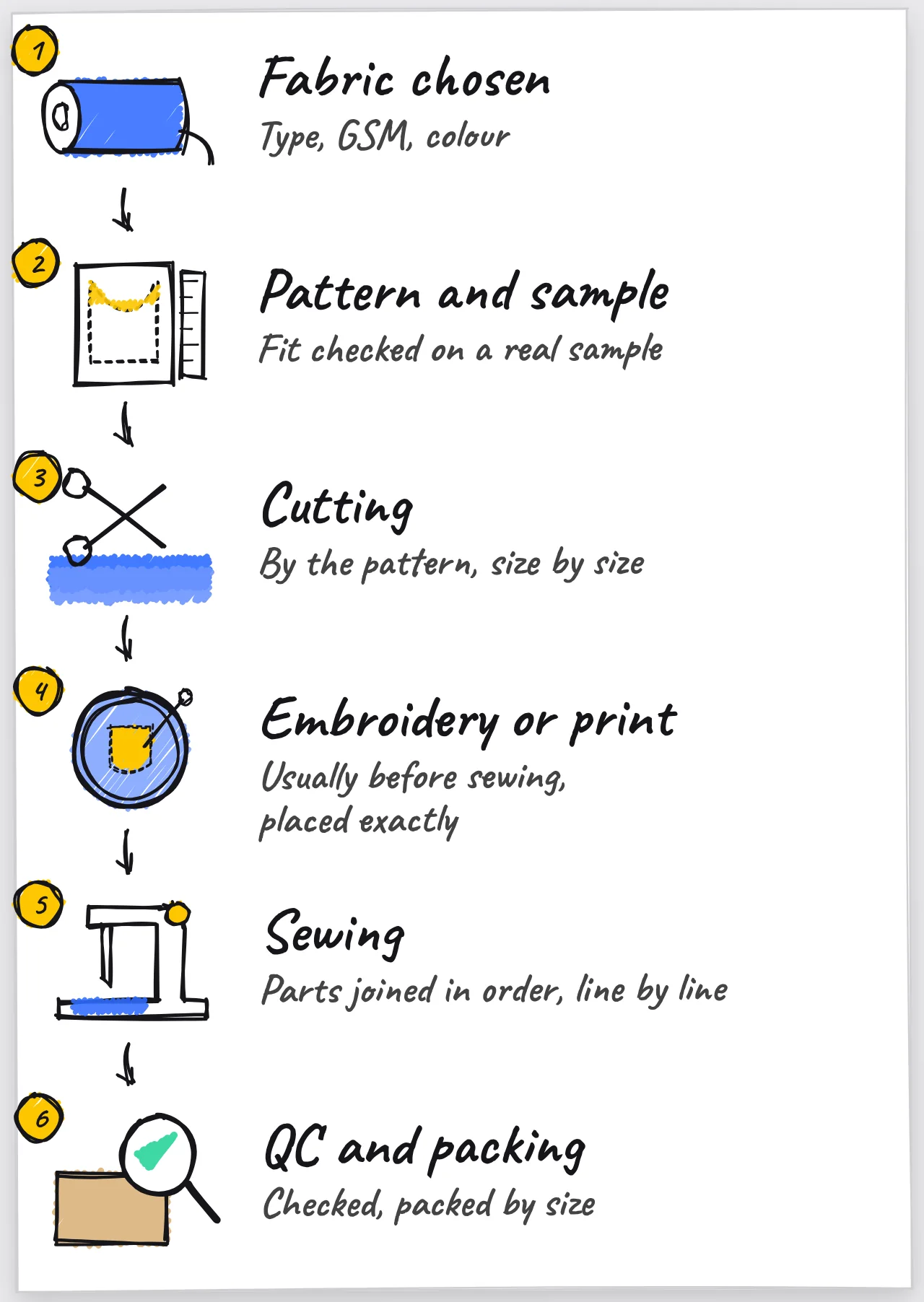
A typical hoodie goes through six stages. The fabric is chosen and checked. A pattern is made and a sample is sewn, so the fit can be judged on a real garment. The fabric is cut in layers, size by size. Embroidery or print is placed, usually on the cut pieces before sewing. The parts are sewn together one after another. Finally the pieces are checked, pressed, folded and packed by size.
The sample stage is the cheapest place to find a problem. Fixing a collar on one sample takes minutes. Fixing it on 100 sewn hoodies costs far more.
How it works at Friday: you get one coordinator and an update at every step. We collect everyone's size and pack by size. A free sample comes once you confirm, work starts with a 50% advance, and delivery takes 10–15 days by courier anywhere in Bangladesh.
Before you order: a checklist
- Fabric type and GSM, in writing
- Fibre composition
- Fit: regular or baggy, and the size chart
- Decoration: embroidery or print, its size, place and colours
- Trims: zipper or pullover, drawcord colour, rib
- A sample, and a washed sample if you can
- The price at your quantity, and what it includes
- The delivery date, and how sizes will be packed
Questions people ask
How much does a custom hoodie cost in Bangladesh?
Around ৳500 for budget quality, ৳700–1,000 for a standard hoodie, ৳1,700–3,000 with branding, and ৳5,000 and up for premium. Prices are per piece for bulk orders.
What is the minimum order for hoodies?
At Friday it is 30 pieces for hoodies, 20 for jerseys and 60 for T-shirts.
Fleece or French terry for Bangladesh?
Winters here are short and mild. Heavy fleece suits the coldest weeks and gives the classic hoodie look. French terry is more comfortable for cool evenings and indoor wear. If you are unsure, ask for a sample of each.
Does embroidery last longer than print?
Embroidery usually lasts as long as the garment, because it is thread stitched into the fabric. Print quality varies a lot with the method and the maker, so ask how many washes it has been tested for.
Can a hoodie have a zipper?
Yes. Zip hoodies are possible, and all customisation is available on bulk orders. Ask for the zipper type in your quote.
How long does a hoodie order take?
Delivery is typically 10–15 days. If your date is urgent, talk to us before you confirm.
Ready when you are
Send the headcount and the date. We will take it from there.